
- Home
- About
About Gamma Pi Chapter
Proudly serving Prince George’s County, Maryland and the broader community through brotherhood, scholarship, service, and leadership since 1973.
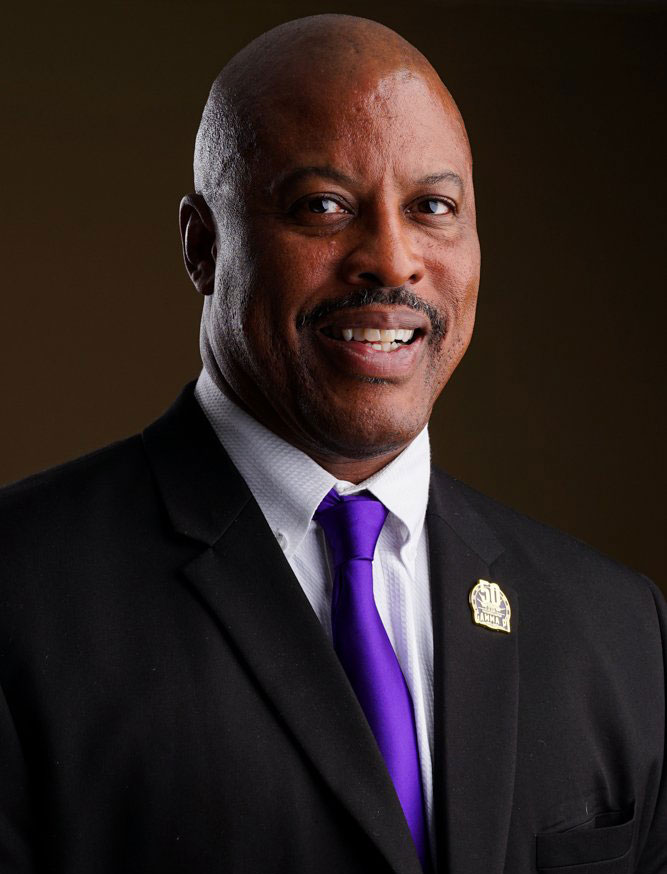
A message from the basileus
Brotherhood, Leadership & Service
Through our student mentoring program, Project Enrich, we have prepared over six hundred young people for higher education and given out over five-hundred thousand dollars in scholarships.
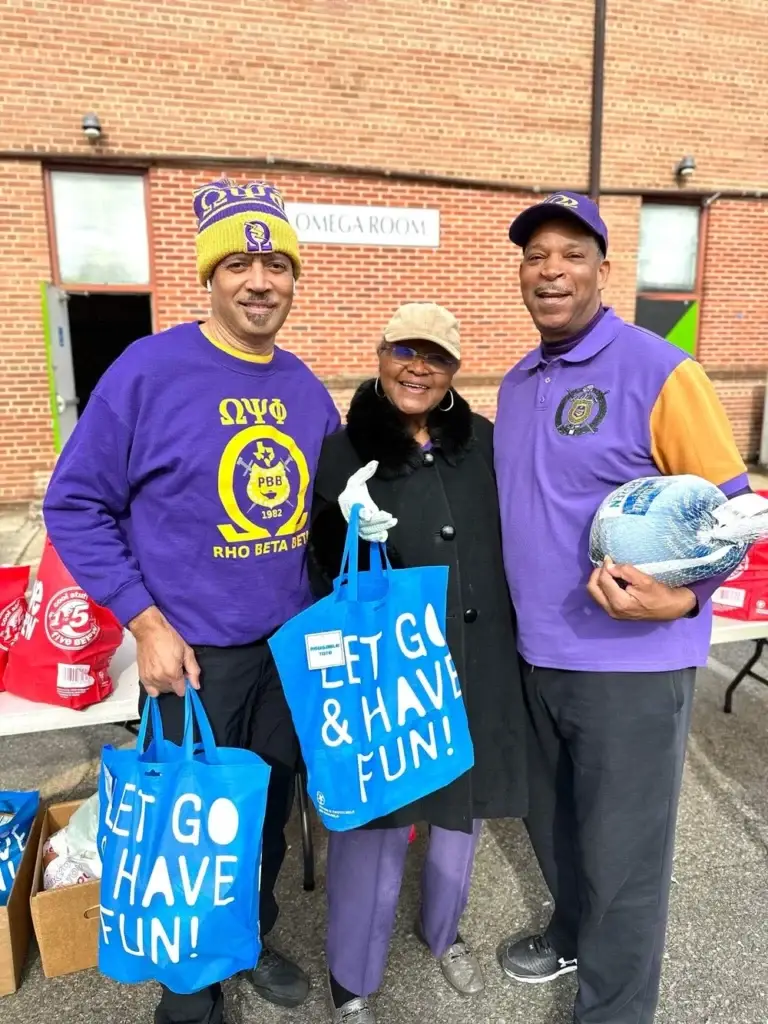
In addition, through our Social Action program, we continue to brighten the lives of senior citizens by distributing turkeys at Thanksgiving, sponsoring senior banquets, and promoting a “Seasoned Citizens” birthday bash.
We are proud to say that we have produced leaders that have served Omega on the District and International level and are exemplary assets to our community in general. We have men in our chapter that are leaders in business, politics, government, private industry, and sports. Please join us as we celebrate our 50th Anniversary as a graduate chapter in Prince George’s County MD.
We will continue to support, empower, and affect the lives of the youth and families of Prince George’s County and the communities in which they live. We look forward to the next fifty years in service to our community as we live our cardinal principles and display to the world that “Friendship is essential to the soul.”
In Friendship and Brotherhood,
Terry Hare
27th Basileus
Gamma Pi Chapter
About Gamma Pi
Welcome to Gamma Pi
A Legacy Rooted in Brotherhood
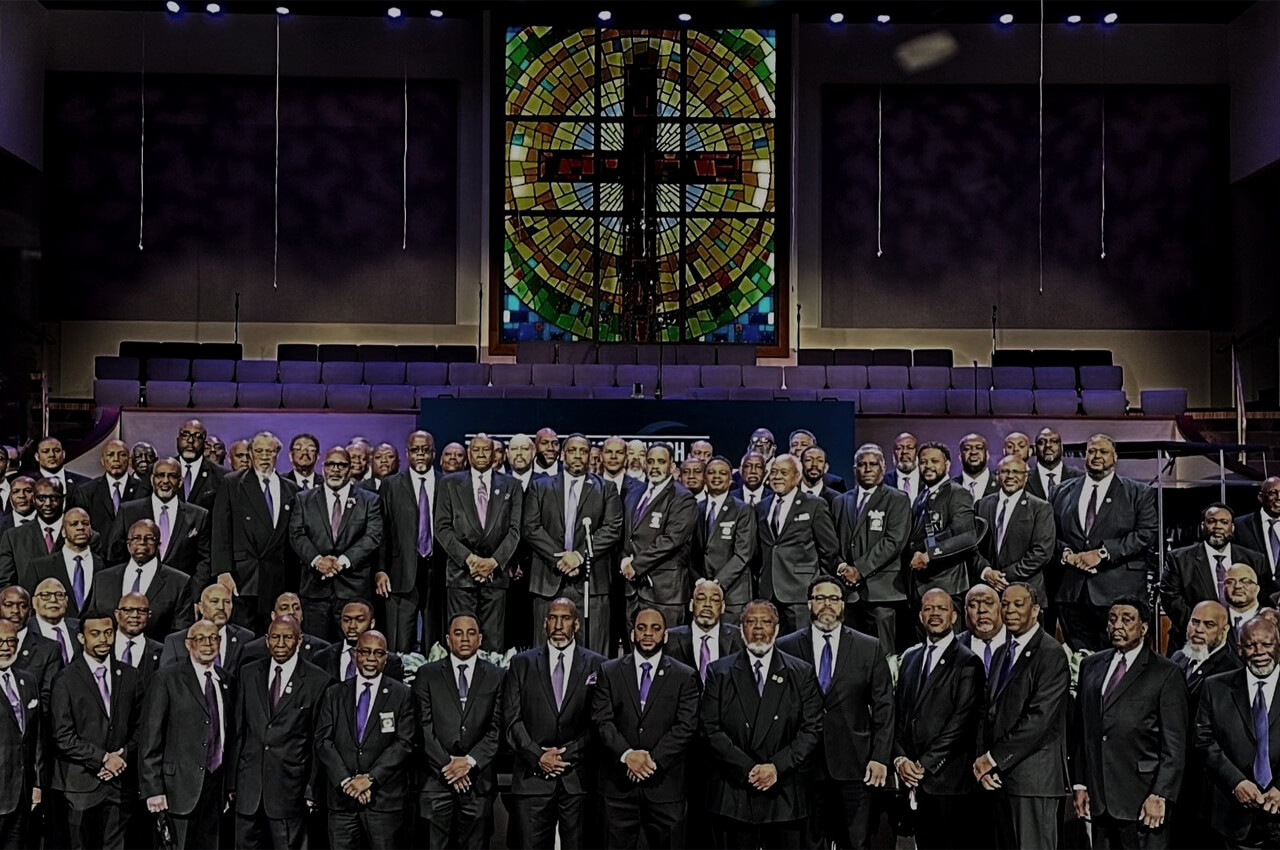
Since its establishment on March 5, 1973, Gamma Pi, also known as The Super Chapter, has played a pivotal role in serving the Prince Georges County, MD area. As the third largest chapter in the Omega Psi Phi Fraternity, it boasts over 300 active members who participate in 25 committees and support two charitable foundations, reflecting a strong commitment to community service and fraternity values.
Since
Purpose
The purpose of the Fraternity shall be to bring about a union of college men of similar high ideals of scholarship and manhood in order to:
- Stimulate the attainment of ideals and ambitions of its members;
- Disseminate and inculcate those ideals among those with whom its member come in contact;
- Cooperate with the schools where its chapters may be located in fostering these ideals;
- Occupy a progressive, helpful and constructive place in the civic and political life, domestically, and internationally;
- Occupy a progressive, helpful and constructive place in the civic and political life, domestically, and internationally;
OMEGA PSI PHI FRATERNITY, INC.
Our Fraternal Foundation
Explore the history and legacy of Omega Psi Phi Fraternity, Inc., the first international fraternal organization founded on the campus of a historically Black college.
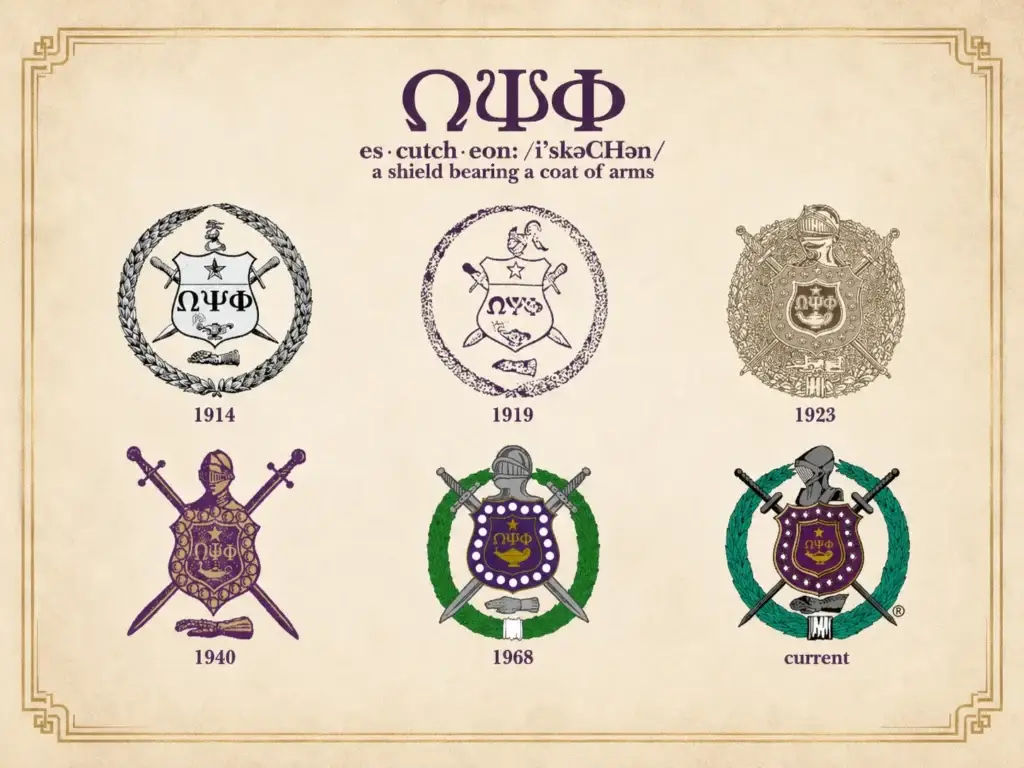
The Beginning
Omega Psi Phi Fraternity, Inc. is the first international fraternal organization founded on the campus of a historically black college.
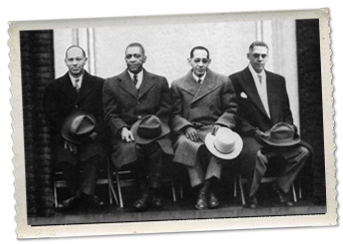
On the evening of November 17, 1911, Omega Psi Phi was founded inside the Science Building (later renamed Thirkield Hall) at Howard University located in Washington, D.C. The founders were three undergraduates — Edgar Amos Love, Oscar James Cooper and Frank Coleman. Joining them was their faculty adviser, Ernest Everett Just.
From the initials of the Greek phrase meaning, “friendship is essential to the soul“, the name Omega Psi Phi was derived. That phrase was selected as the motto.
Manhood, Scholarship, Perseverance and Uplift were adopted as Cardinal Principles.
On November 23, 1911, Edgar A. Love became the first Grand Basileus (National President). Oscar J. Cooper and Frank Coleman were selected to be the Grand Keeper of the Records (National Secretary) and Grand Keeper of Seals (National Treasurer), respectively. Eleven undergraduate men were selected to become the charter members.
Alpha chapter was organized with fourteen charter members on December 15, 1911. Brothers Edgar A. Love, Oscar J. Cooper and Frank Coleman were elected the chapter’s first Basileus, Keeper of Records, and Keeper of Seals, respectively.
Brother Cooper became the fraternity’s second Grand Basileus in 1912 and authorized the investigation of establishing a second chapter on the campus of Lincoln University located in Pennsylvania.
Brother Love was elected as the third Grand Basileus in 1912 and served until 1915. In 1912, Howard University officials did not initially recognize the fraternity as a national organization and Omega Psi Phi’s leadership refused to accept limited recognition. As a result, the fraternity operated without official sanction, until the university withdrew its opposition in 1914, the same year Beta chapter was chartered at Lincoln University.
Omega Psi Phi was incorporated under the laws of the District of Columbia on October 28, 1914. Brother George E. Hall, the fourth Grand Basileus, authorized the establishment of Gamma chapter in Boston.
Brother Clarence F. Holmes served as Omega’s sixth Grand Basileus. Under his leadership, the fraternity’s first official hymn, “Omega Men Draw Nigh,” was written by Otto Bohannon.
Omega played a vital role when the United States entered World War I in 1917 by having several brothers in the first class of black soldiers graduate from Camp Fort Des Moines, a military training facility located in Iowa. Several Omegas, including Campbell C. Johnson, John Purnell and founders Frank Coleman and Edgar A. Love are among its graduates.
A year later in 1918, retired Colonel Charles Young, rode 500 miles on horseback, from Wilberforce, Ohio, to the nation’s capital, to show he was always fit for duty.
Stanley Douglas served as editor to the first Oracle which was published in the spring of 1919.
In 1919, Raymond G. Robinson, the seventh Grand Basileus, established Delta chapter on the campus of Meharry Medical School which is located in Nashville, Tennessee.
Stanley Douglas served as Editor of the Oracle which was first published in the spring of 1919. When Robinson left office in 1920 there were ten chapters in operation.
Harold H. Thomas, the eighth Grand Basileus, was elected at the Nashville Grand Conclave in 1920.
During this Conclave, Carter G. Woodson inspired the establishment of National Achievement Week to promote the study of Negro life and history.
The Atlanta Grand Conclave in 1921 brought an end the fraternity’s first decade.
Omega built a strong and effective force of men dedicated to its cardinal principles of manhood, scholarship, perseverance, and uplift.
Internal Growth
In 1922, J. Alston Atkins, the 9th Grand Basileus, appointed the first district representatives. Today, there are eleven such officers who are elected annually at district meetings.
Also in 1922, the office of Vice Grand Basileus was created. The Grand Keeper of Records became the Grand Keeper of the Records and Seal. In 1923, Lambda Chapter affectionately referred to as “the pearl of the west coast,” was organized at the University of Southern California. Omega Psi Phi becomes the first black Greek organization to span its membership across the United States – from the Atlantic (Iota in Atlantic City) to the Pacific (Lambda in Los Angeles). Sigma chapter was organized at McGill University, which is located in Montreal, Quebec (Canada) on December 15, 1923. Brother Walter R. Dunston, former Basileus of Phi chapter, set up the fraternity’s first international chapter with the assistance of Brother George W. Brown. In 1926, the memorial for Brother Colonel Charles Young is held at Arlington National Cemetery. Memorial Service is established to memorialize Brother Young’s birthday. The first Omega Bulletin was published in 1928 and Campbell C. Johnson was the editor. In 1930, Omega Psi Phi became one of five founding members of the National Pan-Hellenic Council with 13th Grand Basileus Matthew W. Bullock elected as its first permanent chairman.
“Omega Dear,” was adopted as the official hymn in 1931. Charles R. Drew, professor of surgery, and Mercer Cook, professor of languages, both members of the Howard faculty, were the composers. Cook wrote the music and first stanza; Drew wrote the last two stanzas. By mid-1930, President Franklin D. Roosevelt created the Federal Council of Negro Affairs or “Black Cabinet,” which was an informal group of African-American public policy advisors who were organized to help the country emerge out of the depression. Omega men: Robert C. Weaver, Lawrence Oxley, Roscoe Brown, Frank Horne, William Hastie, J. Arthur Weiseger, Ted Poston, Campbell C. Johnson and William Trent were among those who served on the cabinet. Each of the founders graduated and went on to have distinguished careers in their chosen fields: Edgar Love became a bishop in the Methodist church; Oscar Cooper practiced medicine in Philadelphia for over 50 years; Frank Coleman became the chairman of the Department of Physics at Howard University and Ernest E. Just became a world-renowned biologist and the 1st recipient of the prestigious NAACP Spingarn Medal.
The Forties
The Omega “Sweetheart Song,” with words and music by Don Q. Pullen, was adopted as the official sweetheart song by the 1940 Nashville Grand Conclave.
Founder Ernest E. Just entered Omega chapter in 1941.
In 1941, Brother Charles Drew perfects the use of blood plasma as a life-saving tool. Brother William Hastie resigns as Civilian Aide to the Secretary of War in protest against discrimination in the armed forces. He was later appointed Governor of the Virgin Islands by President Harry S. Truman.
Since 1945, the fraternity undertook a National Social Action program to meet the needs of African Americans in the areas of health, housing, civil rights, and education. The office of Second Vice Grand Basileus is created. Dexter Eure, of Theta Psi chapter, is elected to the position on the Supreme Council.
In 1949, the first National Headquarters Building located at 107 Rhode Island Avenue, N.W., Washington, D.C. was purchased.
H. Carl Moultrie was selected to serve as the first National Executive Secretary. That same year, the scholarship fund was renamed in honor of Charles R. Drew.
The Fifties
During this era, social action became Omega’s primary organizational thrust. Thousands of Omega men became actively involved in the fight to eliminate racial discrimination. Most notably, Omega men Spottswood Robinson, Oliver Hill and James Nabrit were part of the inner circle for the National Association for the Advancement of Colored People (NAACP) Legal Defense and Educational Fund (LDF). That group coordinated the court battles for racial equality. Their work culminated with the landmark decision outlawing segregated public schools, Brown v. Board of Education. In 1955, Brother Roy Wilkins was chosen to be the executive secretary of the NAACP and in 1964 he became its executive director.
The Los Angeles Grand Conclave in 1955 initiated a program whereby each graduate chapter would purchase a Life Membership from the NAACP. Tau Chi was founded in Monrovia, The Republic of Liberia on December 1, 1955 during the tenure of Grand Basileus John F. Potts.
Brother Wiley A. Branton, served as the principal lawyer in the civil rights case that desegregated the public schools in Little Rock, Arkansas, in 1957. Ernest Green was the oldest among the nine students who integrated the all-white Central High School. Green later attended Michigan State University, where he was later initiated into the fraternity through Sigma chapter. Between 1955 and 1959, chapters contributed nearly $40,000 to the NAACP.
The Sixties
The struggle for social justice shifted into high gear. Omega men throughout the United States were active participants in the “sit-ins” and other civil rights demonstrations. Moreover, undergraduate brothers were especially involved in the demonstrations of the civil rights struggle.
In 1961, the Washington, D.C. Grand Conclave highlighted Omega’s first 50 years of accomplishments. Founders — Love, Cooper, and Coleman were present. Thirteen of 23 former Grand Basilei also attended this historic gathering. It was a once-in-a-lifetime opportunity for young brothers to mingle with some of the greatest black men that America ever produced.
The Golden Anniversary Conclave authorized a $150,000 investment towards the construction of a new national headquarters building in Washington, D.C.
The March on Washington for Jobs and Freedom occurred in Washington D.C. on August 28, 1963. Brother Bayard Rustin, an activist and adviser to Martin Luther King Jr., is one of the event’s primary organizers. King delivers his “I Have a Dream,” speech. In 1964, the new national headquarters was dedicated. It was a dream come true and was the first building of its type to be built by a black fraternity. Founders — Love, Cooper and Coleman participated in the ceremonies. The name was later changed to the International Headquarters and was located at 2714 Georgia Avenue, N.W., Washington, D.C.
In January 1966, Brother Dr. Robert C. Weaver was appointed the first Secretary of Housing and Urban Development as well as the first black person appointed to a cabinet-level position in the United States. Founder Frank Coleman entered Omega Chapter in 1967.
The Charlotte Grand Conclave in 1968 mandated a constitutional convention for the revision of the fraternity’s constitution and by-laws as well as the Ritual. That convention was held in Atlanta in 1969.
The Seventies
The newly revised constitution and by-laws and the ritual went into effective at the close of the 1970 Pittsburgh Grand Conclave.
H. Carl Moultrie, Omega’s only National Executive Secretary, was appointed a judge to the Superior Court of Washington, D.C., in 1972. Moultrie’s resignation was accepted with regrets.
Omega conferred upon Moultrie the title of National Executive Secretary Emeritus which was later changed to Executive Secretary Emeritus.
The Seventies brought more unpleasant news – Founder Oscar J. Cooper entered Omega Chapter in 1972. Two years later in 1974, Edgar A. Love, the last surviving founder, entered Omega Chapter.
On November 16, 1975, an impressive granite monument was dedicated to the memory of the four founders. The monument was placed near Thirkield Hall, the site of Omega’s birth place at Howard University.
A revived Life Membership program resulted in a very large number of new Life Members.
In 1976, the Atlanta Grand Conclave became the most attended up to that point. Many new undergraduate chapters were chartered, because of the increased enrollment of black students at previously all-white colleges and universities.
“Operation Big Vote,” was successful in getting thousands of African-Americans to vote in the 1976 election. During that same year, Brother Clifford Alexander was appointed Secretary of the Army.
In 1979, during the Denver Grand Conclave the fraternity committed to contribute $250,000 to the United Negro College Fund over the next five years.
Eighties, Nineties and Today
In 1981, the Omega Psi Phi Fraternity endowed its first endowed Omega faculty chair at Rust College, located in Holly Springs, Mississippi. President W.A. McMillan stated that the chair would be used to promote the humanities.
Grand Basileus Moses C. Norman, Sr., was elected at the 1984 Louisville Grand Conclave and served six years, the longest tenure of any Grand Basileus. He appointed a committee to review the structure and operations of the fraternity as a means of future focus.
In 1984, John S. Epps was selected as only the fifth Omega man to serve as Executive Secretary. H. Carl Moultrie was named, Executive Secretary Emeritus. The 75th Anniversary Grand Conclave celebration was held July 25-August 1, 1986, in Washington, D.C., the city of Omega’s birth. It surpassed the previous attendance record.
On January 28, 1986, Brother Ronald McNair died during the launch of the Space Shuttle Challenger. Later that year, Brother Jesse Jackson Jr. became a candidate for the Democratic Party presidential nomination. Also, Don Q. Pullen and W. Mercer Cook entered Omega Chapter. On January 13, 1990, Brother L. Douglas Wilder became Virginia’s sixty-sixth governor and became the first elected African American governor in United States history. C. Tyrone Gilmore Sr. became the 34th Grand Basileus in June 1990. Under his leadership, a site for a new World Center and International Headquarters located in Decatur Ga. was identified. Also, the structure was revamped and the international chapters were transformed into the 13th District. The first Youth Leadership Conference was held in 1993 at Southwest College located in Los Angeles, California. Over 100 young men were hand to hear Omega men talk about subjects ranging from manners to morality.
Dorsey C. Miller Jr., the fraternity’s 16th Second Vice Grand Basileus, was chosen as the 35th Grand Basileus at the Cleveland Grand Conclave in 1994. He was the 1st member to be elected to both positions. Miller’s administration closed the sale of the property at 3951 Snapfinger Parkway, which is the site of new international headquarters. The property at 2714 Georgia Ave. N.W. was disposed. The Georgia Avenue location served as the fraternity’s headquarter for 31 years and the fraternity shield that adorned the facade is now at the Smithsonian.
Lloyd J. Jordan, Esq., who had previously served as Grand Counselor, was elected the 36th Grand Basileus at the 70th Grand Conclave in 1998 in New Orleans. In 1998, Brother David Satcher was appointed the 16th Surgeon General of the United States. Brother Togo West, Jr. was appointed Secretary of Veteran Affairs. Brother S. Earl Wilson was appointed executive director in June 2000.
In 2002, George Grace was elected Grand Basileus during the 72nd Grand Conclave held in Charlotte, N.C. Under Grace’s leadership the fraternity realized financial solvency and a steady increase in its membership rolls.
Warren G. Lee Jr., who served as the 23rd Second Grand Vice Basileus, became the 38th Grand Basileus during the Little Rock Grand Conclave in 2006. During Lee’s tenure, Omega fortified its mission and brought sustenance to those in need. Omega men across the United States mentored the youth and organized various social action programs and donated millions to worthy causes.
In 2010, Dr. Andrew A. Ray was elected the 39th Grand Basileus during the 76th Grand Conclave held in Raleigh, North Carolina. During his administration, Omega became the first black Greek organization to charter a graduate chapter in Great Britain. The fraternity also joined forces with President Barack Obama to promote fatherhood and responsible parenting through the national Fatherhood Initiative. Omega celebrated its 100th anniversary with a grand celebration held in July, 2011, in Washington D.C. Attendance exceeded 10,000. During that gathering, Brother Kenneth Barnes was named International Executive Director.
Antonio F. Knox Sr. was elected the fraternity’s 40th Grand Basileus during the Grand Conclave in Philadelphia in 2014. Under Knox, the fraternity championed a number of civil rights initiatives. Omega became a strong voice against police brutality, efforts to suppress voting rights and other social ills. The fraternity sought plausible solutions to civil unrest that erupted in urban communities following fatal police shootings of several unarmed African-Americans. Today, Omega Psi Phi has over 700 chapters throughout the Bahamas, Bermuda, Canada, China, Germany, Ghana, Hawaii, Italy, Japan, Korea, Mexico, Panama, St. Croix VI, St. Thomas VI, United Arab Emirates, United Kingdom and the United States.
There are many notable Omega Men recognized as leaders in the arts, the sciences, academics, athletics, business, civil rights, education, government, and science sectors at the local, national and international level.
Omega continues to flourish, largely because founders — Cooper, Coleman, Love and Just — were men of the highest ideals and intellect. The founders selected and attracted men of similar ideals and characteristics. It is not an accident that many of America’s great black men are or were Omega Men.
Since its humble beginnings on the Howard University campus, the Omega Psi Phi fraternity continues to be on the front line, leveraging its power, influence and more than 100 years of commitment to the uplift of our people and our communities.
GAMMA PI CHAPTER HISTORY
Rooted in Prince George’s
County
Since 1973
Discover the founding, growth, service, and lasting brotherhood of Gamma Pi Chapter.
In The Beginning
The Gamma Pi Chapter of the Omega Psi Phi Fraternity, Inc. was originally conceived by several Brothers residing in the Prince George’s community. Although the purpose and aim for establishing a chapter in Prince George’s County mirrored those aims and purposes of the Founders of our fraternity, there were other bilateral issues that took precedent: 1) establishing a chapter that would be closer to home for the members that were traveling to Montgomery County and Washington, D.C. to maintain their active membership in the fraternity; and 2) creating a chapter that would be small enough to maintain a close bond among the brotherhood in order to carry out the mandates of the fraternity. The Fraternity has always been a source of leadership training for young Black men, whose opportunities to exercise such skills has been limited. Therefore, it comes as no surprise that several young men across the country have sought to establish chapters of the fraternity in their respective places of residence. Whether their residence was on a college campus, or in the case of Graduate chapters, in their cities, or counties. The young leaders that chartered the Gamma Pi Chapter were no different. They sought the opportunity to further their alliance with the fraternity in an area that was remotely close to their residences.
In 1972, the idea to establish a graduate chapter of Omega Psi Phi Fraternity, Inc. in Prince George’s County, Maryland was conceived by several graduate brothers residing in the County. Many brothers were contacted to ascertain if they had a similar interest. The first meeting took place at Timothy McIntosh’s home. Other initial meetings were held at various homes of the charter membership. Subsequent meetings were held at The First Baptist Church of Highland Park approximately a year after receiving the chapter charter. This group of brothers with similar ideals and like attainments began to grow and approached a membership of 21 brothers.
On January 31, 1973, twenty-one brothers made application to the Supreme Council of the Fraternity through the Second District Representative, Brother Milton Johnson, for a graduate charter, which established Gamma Pi Chapter in Forestville, Maryland. The charter was granted on March 5, 1973. Brothers Timothy McIntosh, John Robinson, Joseph Williams and Steve Settle were elected to the positions of Basileus, Vice Basileus, Keeper of Records and Seal, and Keeper of Finance, respectively. The chartering ceremony was held at what was at the time called Bowie State College(now Bowie State University).
Charter Members - The Pioneers
The Charter Brothers of Gamma Pi Chapter and their contributions in paving the way for the chapter are forever etched in the fabric of what has become The Super Chapter, Home of the Beltway Ques.
The charter members are Giles Bragg (Omega Chapter), Reuben Buggs (Omega Chapter), George Edwards (Omega Chapter), Floyd Gilmore, Robert Graves, Willie Hagans, Thomas Hardin, Donald R. Herring, Sr., Willie Lamb, Timothy McIntosh, Lee McLean (Omega Chapter), Raymond Nobles (Omega Chapter), John Robinson, Dillard Rowe, Herbert Ruffin, Steve Settle (Omega Chapter), Clemmie Solomon, Nathaniel Vann (Omega Chapter), Wiley Welch, Joseph Williams and Timothy Williams (Omega Chapter).
The Early Years: Gamma Pi in Action
Several of the new chapter’s functions were initiated at The First Baptist Church of Highland Park in Landover. Those events included the Easter Egg Hunt and the Senior Citizens Banquet. The Kiddie Cabaret became a very popular event within the community as well and was held every year from 1974-84.
The chapter held its first Cabaret at the Knights of Columbus Hall in August of 1973. This impromptu Cabaret was organized by the first Basileus of Gamma Pi, Timothy McIntosh. This was also the chapter’s first official fund-raiser. Shortly thereafter, the Cabaret was moved to St. Mary’s Catholic Church’s Burgundy Room in Lanham and was consistently attended by approximately 500 Prince George’s residents. This event was then called the Annual Mardi Gras, and through today, it has become one of the chapter’s most popular and successful events. Another premiere social event, the annual chapter picnic, got its start at Hankins Field in Oxon Hill.
The Achievement Week observance has also been a very popular affair of the brotherhood. The first program was held at Bowie State College, November 3, 1973, under the chairmanship of charter member Brother Hagans. The theme was “Good Human Relations: The Keys of Love, Compassion & Understanding”. Under the chairmanship of Brother Jim Jones in 1979, the Achievement Week banquet was expanded to a formal format.
The first Pledge Program took place in 1978. The first Dean of Pledges was Brother Calvin Martin. The first members initiated into Gamma Pi were Brothers Melvin Graham and James Coleman (Omega chapter). Activities associated with this pledge program were held at The First Baptist Church of Highland Park.
On May 3-5, 1985, Gamma Pi Chapter hosted the Second District Conference for the first time. The conference was held at the J. W. Marriott Hotel in Washington, DC, with the theme being, “The Importance of Black Political Action Now”. Brother Melvin White served as the District Marshal and Brother Dillard Rowe served as the Deputy District Marshal.
The first annual Talent Hunt Program was held in 1974 at Central High School in Seat Pleasant under the chairmanship of charter member Brother Edwards. As a mandated national program, Gamma Pi’s Talent Hunt Program has been held annually. The original program’s format only included the category of music. Since then, theTalent Hunt has been expanded to include dance, drama and visual arts.
The first Founders Award recipient of Gamma Pi Chapter was Brother Robert Busby (Omega chapter). This award is given to a Brother who has made noteworthy contributions to the fraternity at the local, district, national and international levels.
Notable Moments in Gamma Pi History
Gamma Pi’s history is dotted with chapter and individual accolades. It is the only chapter of Omega Psi Phi’s Second District (Delaware, Maryland, New Jersey, New York and Pennsylvania) to be named Graduate Chapter of the Year five separate times — in 2003, 2005, 2006, 2015, and 2020. In 2010, the chapter added to its legacy with the historic election of former Basileus Kenneth Rodgers as the Second District Representative leading the five-state region. Also in 2010, Second District chapters voted Gamma Pi the Graduate Social Action Chapter of the Year. Gamma PI has already co-hosted a Districtwide conference and will serve as the sole host for the 2012 District Conference in April at Prince George’s County’s National Harbor resort.
Gamma Pi is also home to numerous influential community leaders. In addition to Brother Rodgers as District Representative, the chapter is home to two Prince George’s County Executives, Brothers Rushern Baker and Jack Johnson. Also, Brother U.S. Ambassador Teddy Taylor (Papua New Guinea, Solomon Islands and Vanuatu), Bowie State University President Brother Dr. Mickey Burnim, former Chief of Staff for the Maryland Lieutenant Governor Bro. Earl Adams, Jr. and Brother Dr. Ed Chappelle, DDS, past President of the National Dental Association.
Continuing the Legacy of Gamma Pi
Gamma Pi Chapter continues to strengthen brotherhood, support scholarship, and serve the community through meaningful programs and lasting connections.
A message from the basileus
Stay Connected With, Gamma Pi
Get chapter news, events, brotherhood stories, scholarship updates, and community impact highlights.
- We never send spam emails. Only meaningful Gamma Pi updates, including chapter news, upcoming events, brotherhood highlights, community initiatives, and opportunities to stay connected.